, , , , ,

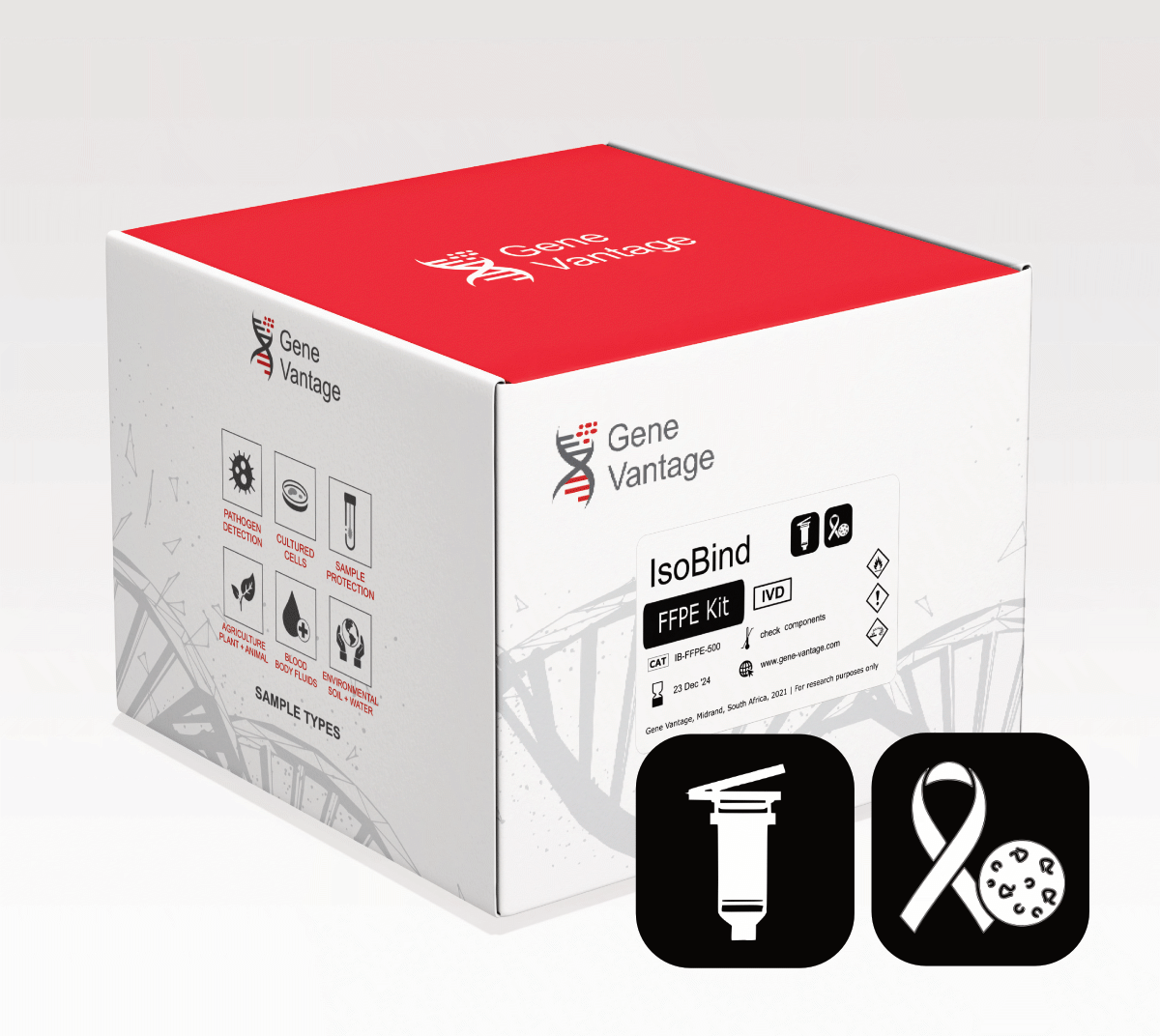
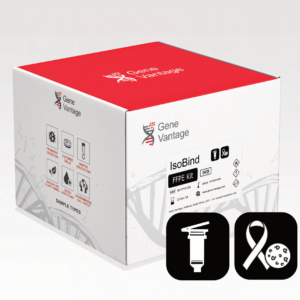
IsoBind FFPE DNA Extraction Kit

IsoBindManual · Silica spin column

Manual silica spin-column DNA purification from FFPE tissue sections and curls, with deparaffinisation, digestion and crosslink reversal.

Pack size Catalogue number
50 preparations IB-FFPD-50
250 preparations IB-FFPD-250

Specialists in the field of nucleic acid extractions

  • only manufacturer of such products in Africa
  • 1-3 Day Delivery times in South Africa

Overview

Formalin-fixed, paraffin-embedded tissue is a demanding source of DNA because fixation, paraffin embedding and prolonged storage can reduce nucleic-acid accessibility. The IsoBind FFPE DNA Extraction Kit provides a dedicated manual workflow for FFPE tissue sections and curls.

Deparaffinisation, Proteinase K digestion and heat treatment prepare the sample before silica spin-column purification, giving research laboratories a route from FFPE material to purified DNA using standard benchtop equipment.

Key benefits

Amplifiable DNA from archived tissue
A dedicated 90 °C crosslink reversal step frees DNA from formalin damage before binding, so more of each FFPE sample can be used for PCR and NGS.
Standard benchtop equipment
Runs with a microcentrifuge and a heating block, with no extraction instrument to buy.
Local manufacturer, direct support
Manufactured in South Africa by Gene Vantage. Speak directly to the scientists who formulate the reagents, and ask about custom pack sizes.
RNA-free DNA when needed
Add user-supplied RNase A at the lysis step to remove co-purified RNA.

How it works

FFPE material is deparaffinised and rehydrated before enzymatic digestion and high-temperature crosslink reversal. The clarified lysate is combined with binding buffer and loaded onto the silica spin column, which is then washed, dried and eluted.

Workflow

1Deparaffinise2Rehydrate3Lyse and digest4Reverse formalin crosslinks5Bind to silica6Wash and dry7Elute

Measuring FFPE DNA

FFPE DNA is fragmented and partly damaged, so UV-vis and fluorometric readings do not reliably show how much DNA will amplify. Where possible, check FFPE DNA by qPCR before downstream use. Fragmented DNA suits short-amplicon PCR and NGS, not long-amplicon assays.

Contents and storage

Component Per sample Storage
Lysis KPH 200 µL 15-25 °C
Proteinase K 20 µL 4-8 °C
Bind C 200 µL 15-25 °C
Booster L 20 µL 4-8 °C
Wash NovaY 600 µL 15-25 °C
Wash D 600 µL 15-25 °C
Wash Ultimus 600 µL 15-25 °C
Elution Buffer 50 µL 15-25 °C
Spin column 1 column 15-25 °C

All reagents ship at ambient temperature.

At a glance

Sample typeFFPE tissue sections and curls
Nucleic acidDNA
FormatSilica spin column
WorkflowManual
Elution volume50 µL
GradeResearch (RUO)

Full details in the Specifications tab.

Ordering

50 preparationsIB-FFPD-50
250 preparationsIB-FFPD-250

To order or request a test kit: sales@gene-vantage.com

You supply

Reagents

Xylene or other deparaffinisation reagent
Ethanol
Isopropanol
RNase A, 10 mg/mL (optional)

Equipment

Microcentrifuge capable of 12,800 × g (11,000 rpm)
Thermomixer or heating block capable of 56 °C and 90 °C
Vortex mixer
Micropipettes (10 µL to 1,000 µL)
Fume hood or well-ventilated enclosure for xylene handling

Consumables

1.5 mL or 2 mL microcentrifuge tubes
Aerosol-barrier filter tips (10 µL to 1,000 µL)

Applications

PCRqPCRDNA sequencingNGS library preparation
Sample type

FFPE tissue sections and curls

Sample input

4 to 6 FFPE sections

Nucleic acid

DNA

Format

Silica spin column

Workflow

Manual

Elution volume

50 µL

Pack size

50 or 250 preparations

Grade

Research (RUO)

Intended use

For Research Use Only. Not for use in diagnostic procedures.

Shelf life and storage

12 months. Storage: check individual components (see Contents and storage)

Applications

PCR, qPCR, DNA sequencing, NGS library preparation

Shopping Basket
Scroll to Top